This article was originally published by Bridging Loan Directory on 7th August 2026.
Recognise Bank will be busy making dates with its bridging broker partners over the next few months to let them know there is “more to come” after posting a schedule-busting profit last month.
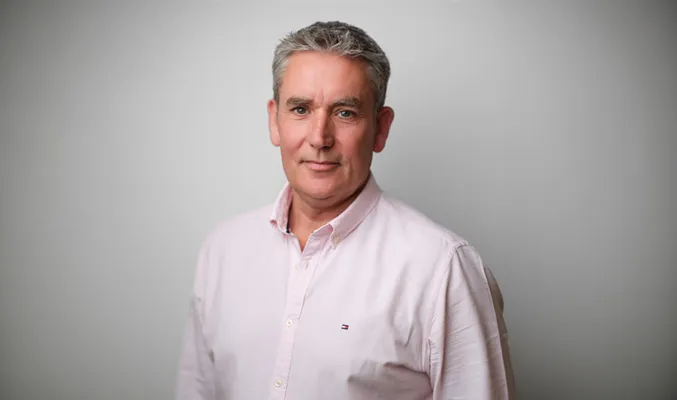
Chief executive Simon Bateman said it was part of the SME and professional property lender’s plan to sit down face-to-face with every broker off the back of those accounts to thank them for their support over a two-year long journey and to get set for further growth ahead.
“We’ll be outlining where we are heading and stressing that we want them to remain part of it,” said Bateman. “It’s our relationship approach to lending.”
Recognise, which Bateman joined in November 2024, reported a post-tax profit of £8.9 million for the year ended 31 March 2026, following a £5.3 million loss in 2025.
It grew its loan book by 51.1% over the year to £461.9 million and increased deposits by 18.8% to £575.5 million. Since the year end, its loan book has grown to more than £500 million.
The result was very much ahead of plan with the original aim of achieving in month profitability by September 2025 and delivering full year profitability in 2027. “We were able to bring that forward to May 2025 and full year 2026,” Bateman said. “If you’d told me back in November 2024, we would have achieved this result I would have been dubious.”
Indeed, his main task back then was to stabilise and rebuild the business. “We were restarting a startup and as such I wanted a new highly skilled executive team who had worked in these businesses before. People who had that rolling up your sleeve’s mentality. Who could provide guidance and support, but also be able to do the do,” he said.
Backed with a first tranche of £20 million in new funding from primary investor Parasol V27, Bateman quickly built up that team including new CFO Tristan Mahoney, CCO Caroline Luxmore and Chief Risk Officer Simon Wilson, who joined COO Ronelle Arbib and General Counsel & Chief Compliance Officer Georgina Behrens, to redefine the business case and strategy.
By May 2025 the company was ready to launch that new strategic plan. “We wanted to deliver profitability to our shareholders in a controlled, gradual fashion. We didn’t want to burn through our capital too quickly,” Bateman explained. “It was about putting in place the right processes, right team structure, bridging products that supported the borrowers’ needs, rationalising the cost base and going to market with the right brokers. We were able to gain traction in the market faster than we anticipated. The results speak for themselves.”
In terms of products, it meant relaunching its commercial real estate offering and completing a number of bridge-to-term deals. The company offers a range of commercial and residential loans up to £10 million, with ‘tailored-to-you’ rates and LTVs of between 70% and 80% respectively.
Recent deals include a £4.75 million bridging loan to support the refinance and expansion of a long-established family-owned Kinross Estate Company in Scotland and a £2.665 million bridging loan to support a regional property developer with a site in Burnage, Manchester.
“We vow that no deal will be turned away until someone within our team has looked at it,” he said. “That means we have been able to look at the more complex and complicated deals that other lenders would turn away by default. We assess the deals individually and see which fit within our lending parameters. Our niche is to look at deals at face value and find a truly bespoke solution. It is something we live or die by.”
This approach was neatly encapsulated by its ‘The Decisive Bank’ rebrand in June. “It was a way of reiterating that we will find a way to say yes, but if we are going to say no then we will do so quickly,” he said. “We won’t go back and say well if you change this or that we might consider it. As individuals we like to make decisions and stick to them. So, if we can be that decisive internally then let’s do it externally as well.”
Recognise is now a true nationwide lender able to lend on deals throughout the UK, whereas previously it was geographically limited to the Northwest and South of England.
Opening a new operations office in Milton Keynes in January this year has been key to that new coverage and improved customer service. The new office brings all bridging and term lending origination operations (pre and post offer), plus loan servicing under ‘one roof‘.
“It has brought closer collaboration across the business. We are working closely together every day driving the deals and process efficiencies and fixing problems and challenges quicker. It also provides the convenience of spending the morning in Milton Keynes and the afternoon in our London HQ. We see the benefits on a weekly basis,” he said.
Recognise has also worked hard to simplify lending processes to drive both cost and time efficiencies.
“I wanted to challenge ourselves to look at the most efficient way of doing things. So, rather than always having 20 steps in a decision process, try and get that to 10 with the same outcome,” he said.
Automated technology, he said, has helped deliver some of those efficiencies but he urged that it can’t be the only solution. “It’s very much the insight, experience and judgement of our underwriters which support our ability to lend,” he said. “We are constantly looking for new efficiencies and that may or not mean the adoption of AI machine learning and analysis over the next 12 months. One of our key projects over the last year was to replace and refresh our data platform. We want to have robust foundations to build AI upon to make sure it provides the speed and capability we need.”
Indeed, Bateman recognises that the bank still has much to do. “Have we got it right yet? You don’t turn a business fully around in 18 months. The next step is to move from the start-up mentality to scale-up,” Bateman said.
Bolstered by the second tranche of £5 million funding from Parasol V27 in March 2026, the focus will remain on bridging, including the launch of a regulated product in the next 12 months. “We want to extend the offering we provide our customers and increase market share,” he said. “We want to offer products and services that the market needs and borrowers want.”
Bateman acknowledges that it has been an “interesting” start to 2026 with high profile failures such as MFS. “The key to being a successful business is to adapt as the market changes. If the market demands something different in terms of product, then we can pivot if need be. But given the type of lending that we do we feel the market is still very much there. We haven’t seen any reduction in the number of deals that come to us.”
He won’t be drawn on what lending targets it has in place only declaring that it is seeking “steady, controlled growth”. In addition, it wants to introduce more efficiencies for its borrowers, brokers and strategic partners.
Broker relationships will therefore remain vital. “We are always looking at ways of improving the service to brokers and the key to that is getting the right feedback,” he said. “I want to know if a broker doesn’t feel that we have been decisive or is getting the right service. We use that to improve.”
Bateman is, however, happy with the progress made to date. “I am extremely proud of what we have achieved in a relatively limited timescale through our appetite and energy. It really makes you think where we could take this business given more time,” he said. “It leaves you wanting more.”